
How to Build a Caregiver Support Network When You Feel Alone
Updated: Apr 22
Over 40% of family caregivers report feeling isolated. Here is how to build a network that actually carries you through, one honest conversation at a time.
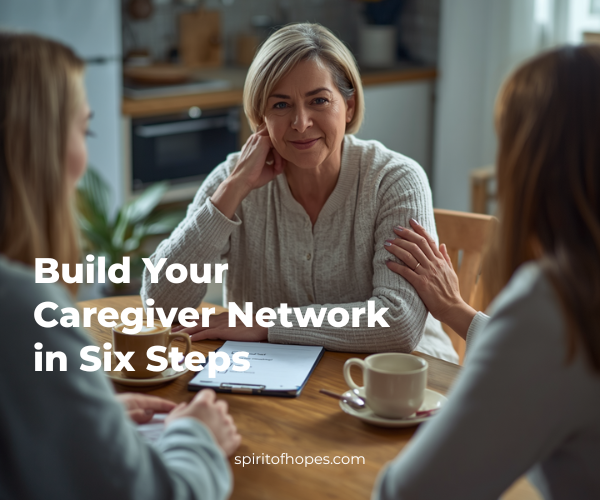
Caregiving is one of the most selfless things a person can do. You wake up early, you go to bed late, and somewhere in between you give everything you have — your time, your energy, your emotional reserves — to someone you love.
And yet, despite being surrounded by need, so many caregivers describe the same quiet, persistent feeling: I am completely alone in this. If that resonates with you, you are not imagining it. Caregiver isolation is real, it is common, and it is one of the most overlooked challenges in family caregiving today.
The painful irony is that caring for someone full-time often leaves no room to care for your own need for connection.
But a support network does not build itself, and it does not have to be large to be life-changing. This guide will show you exactly how to build one, starting today
Building a strong support network is not separate from being a good caregiver. It is how you become one.
Why Caregivers End Up So Isolated
Isolation rarely happens all at once. It creeps in gradually, through a series of small withdrawals that each seem reasonable at the time.
You cancel one dinner because your loved one had a hard day. You stop returning calls because you never have good news to share.
You turn down help because explaining feels more exhausting than just doing it yourself.
Common reasons caregivers withdraw
Friends pull away out of discomfort, unsure what to say or how to help
Guilt about taking time away makes every social interaction feel like a betrayal
The invisible nature of caregiving is no title, no community, no formal support structure
Physical exhaustion makes socialising feel like yet another item on an impossible list
Shame around asking for help, especially when caring for a parent who once cared for you
Understanding these patterns matters because building a support network is not simply a matter of "putting yourself out there."
It requires intentional strategy and a willingness to let people in, even when that feels uncomfortable.
Six Steps to Build Your Caregiver Network
1. Take an Honest Inventory
The first step is not reaching out to anyone. It is sitting down and honestly assessing what your current network looks like.
Ask yourself: Who knows what I am truly going through? Who has offered to help whom I have turned down? What specific kinds of support am I most lacking?
Write your answers down and be specific. "I need someone to cover Tuesday afternoons" is far more actionable than "I need more help." Clarity about what you need is what makes building a network possible.
2. Start With the People Already Around You
The fastest path to support is activating connections you already have. Most caregivers are surrounded by people who want to help but do not know how or who are simply waiting to be asked.
Have the conversation you have been avoiding
What this can sound like:
"I want to be honest with you, I am really struggling. I need some support, and I am not sure how to ask for it."
These conversations feel terrifying in anticipation and almost always go better than expected.
Give people something specific to do
Specific asks that actually work
"Could you sit with Mum on Saturday afternoon for two hours?"
"Would you be willing to pick up prescriptions once a week?"
"Can I call you on Sunday evenings just to talk?"
"Could you handle appointment scheduling this month?"
3. Find Your People — Caregiver Communities
One of the most healing things a caregiver can experience is sitting, physically or virtually, with someone who truly understands. Not someone who is sympathetic, but someone who has held the same exhaustion, felt the same guilt, and navigated the same impossible decisions.
Join Our Memory Café Community
At Spirit of Hopes, we run Memory Café every month. It’s a warm, welcoming community for families navigating memory concerns and aging. It is a safe, structured space where caregivers and their loved ones can connect, share, and breathe.
Memory Café is not a clinical setting. It is a community built around connection, not diagnosis. Whether your loved one has early signs of cognitive change or you are simply finding the caregiving journey harder than expected, there is a place for you here.
✓ Welcoming at all stages of memory concerns
✓ Caregiver-specific support sessions
✓ Activities designed for aging adults
✓ A community that truly understands
✓ Professional guidance available
✓ No referral needed to attend
For caregivers whose schedule makes leaving the house difficult, online communities offer genuine connections around the clock. AARP's Caregiver Community, Caregiver Space, and condition-specific Facebook groups can be remarkably warm, especially during late-night moments when the weight of everything lands hardest.
Also, you can learn the modern caregiver’s guide to staying strong.
4. Rebuild Your Identity Outside of Caregiving
This is the step most caregivers skip because it feels selfish. That is exactly why it matters most. People connect with you, your personality, your interests, and your presence.
When caregiving consumes your entire identity, there is less of you available to connect with.
Rebuilding even small parts of your life outside caregiving is not a luxury. It is what makes sustained connection possible.
This does not require grand gestures. Returning to a hobby, attending a weekly class, or volunteering for something unrelated to care. The goal is identity maintenance.
Reminding yourself and the world that you are a full person, not only a caregiver.
5. Access Professional and Formal Support
Your network should not rely entirely on personal relationships. Professional support exists to fill gaps that family and friends cannot, and using it is a sign of good caregiving, not failure.
Professional support you may not know you can access
Hospital social workers: ask at any specialist appointment to be connected with local resources immediately
Spirit of Hope Home Care Navigation: Beyond standard resources, Spirit of Hope Home Care provides professional guidance to help you navigate the specific complexities of memory care and aging.
If you feel overwhelmed by the "system," our team can help you map out a sustainable plan that integrates both professional and personal support. Contact us today
Veterans' services: if your loved one served, the VA's caregiver programme offers stipends, respite, and mental health support for you
Faith communities: meal networks, visiting volunteers, and pastoral counselling are deeply underused by caregivers
6. Maintain the Network You Build
Building a support network is not a one-time project. It requires ongoing maintenance, and this is where many caregivers quietly let things slip back.
Communicate regularly, not just in crisis. Express specific, genuine gratitude. Update your inner circle as your loved one's needs change.
And revisit your inventory every few months; what felt sufficient six months ago may not be enough today.


Comments