
Beat the Heat: A Caregiver's Guide to Keeping Aging Parents Safe This Summer
Heat illness in older adults progresses quietly and fast, often without the classic warning sign everyone expects. Here is exactly why aging bodies struggle with heat, what to watch for, and what to do in the first ten minutes if something goes wrong.
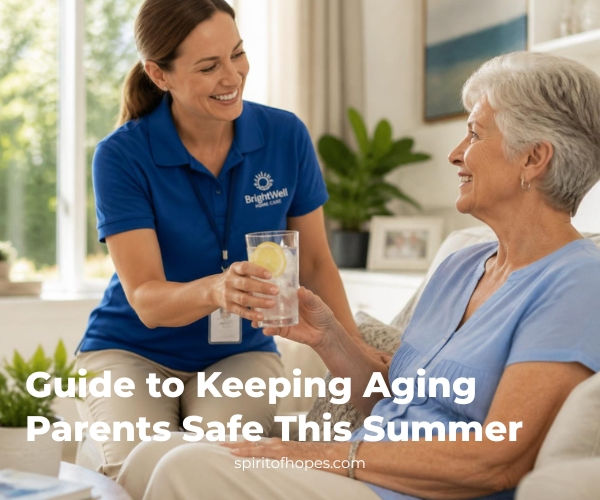
Every summer, Maryland emergency rooms see the same pattern: an older adult who seemed fine in the morning, and by mid-afternoon is confused, weak, and in genuine danger — with a family member insisting "they didn't even say they were hot.
That last detail is not unusual. It is, in fact, the entire problem. Aging bodies lose the ability to signal heat distress the way younger bodies do, which means the people most vulnerable to heat are often the least likely to complain about it.
🔎 Quick answer
Older adults are significantly more vulnerable to heat illness because aging reduces the body's ability to sweat efficiently, dulls the sensation of thirst, and is frequently complicated by chronic conditions and medications that interfere with temperature regulation.
The earliest warning signs are easy to miss: fatigue, mild confusion, and irritability — not necessarily sweating or complaining of heat. Heat exhaustion (heavy sweating, weakness, nausea, cool clammy skin) can progress to heat stroke (hot, dry, or flushed skin, confusion, temperature above 103°F) within an hour if untreated. Heat stroke is a medical emergency — call 911 immediately.
Why Aging Bodies Struggle to Handle Heat
The vulnerability older adults face in hot weather is not simply a matter of preference or comfort — it reflects genuine, measurable physiological changes that come with aging. Understanding the mechanism helps explain why the standard advice given to younger, healthier adults ("just drink water when you're thirsty") is not sufficient protection for an aging parent.
1. Reduced sweat response
Sweat glands become less efficient with age, meaning the body's primary cooling mechanism is simply weaker, even when the internal temperature is rising dangerously.
2. Blunted thirst sensation
The signal to drink water arrives later and weaker in older adults, meaning dehydration can be well underway before any conscious sensation of thirst appears.
3. Reduced cardiovascular reserve
Heat forces the heart to work harder to redirect blood toward the skin for cooling — a demand that is harder to meet for anyone with underlying heart disease or reduced cardiac capacity.
4. Common medications
Several widely prescribed medications directly interfere with the body's ability to regulate temperature or maintain hydration. (See below for details).
5. Cognitive changes affecting judgment
Someone with early memory changes may not recognize or accurately report that they feel unwell, may forget to drink water, or may not adjust clothing or activity appropriately for the heat.
6. Living alone or isolated
Without someone checking in regularly, the early, subtle signs of heat illness can go completely unnoticed until the situation has become severe.
Heat Exhaustion vs. Heat Stroke — Knowing the Difference Could Save a Life
These two conditions exist on a spectrum, but the distinction matters enormously: heat exhaustion is serious and requires action, while heat stroke is a medical emergency requiring immediate 911 activation. The comparison below makes the difference clear at a glance.
The Medications That Quietly Raise Heat Risk
Many of the medications most commonly prescribed to older adults directly interfere with the body's ability to manage heat — a connection that is rarely explained clearly at the time of prescribing. Reviewing this list with a pharmacist before summer heat arrives is one of the highest-value five-minute conversations a caregiver can have.
Important: This is far from a complete list, and the right move is never to stop a prescribed medication independently — it is to ask directly. Our complete Maryland medication management guide covers how to structure this conversation with a pharmacist, and is worth reviewing alongside this guide before summer temperatures peak.
The First Ten Minutes — What to Do If You Suspect Heat Illness
Immediate Response Steps
Act on these in order — do not wait to see if symptoms resolve on their own
1. Move to a cooler location immediately — indoors with air conditioning if possible, or at minimum into shade with airflow.
2. Check for signs of heat stroke first — hot, dry skin, confusion, temperature above 103°F, or loss of consciousness. If any are present, call 911 immediately and do not wait.
3. Remove excess clothing and apply cool, damp cloths to the neck, armpits, and groin — areas with major blood vessels close to the skin, where cooling is most effective.
4. Offer small sips of cool water if the person is fully alert and able to swallow safely — never give fluids to someone who is confused, drowsy, or unconscious.
5. Fan the person or use a spray bottle with cool water to accelerate evaporative cooling while waiting for symptoms to improve or for help to arrive.
6. Monitor closely for 30 minutes — if heat exhaustion symptoms have not clearly improved, or worsen at any point, call 911 or seek emergency care without further delay.
Spirit of Hopes Home Healthcare resources that connect to summer heat safety
References
1. Care.com Editorial Team (2026). Summer Safety Tips for Seniors: How to Help Older Adults Stay Healthy. (Citing demographic mortality research conducted at Duke University). https://www.care.com/c/12-summer-safety-tips-for-seniors/
2. Heat stress in older individuals and patients with common chronic diseases. Published via the National Library of Medicine. Heat stress in older individuals and patients with common chronic diseases - PMC
3. U.S. EPA Climate Change Indicators: Heat-Related Deaths and Vulnerability in Older Adults. https://www.epa.gov/climate-indicators/climate-change-indicators-heat-related-deaths


Comments